
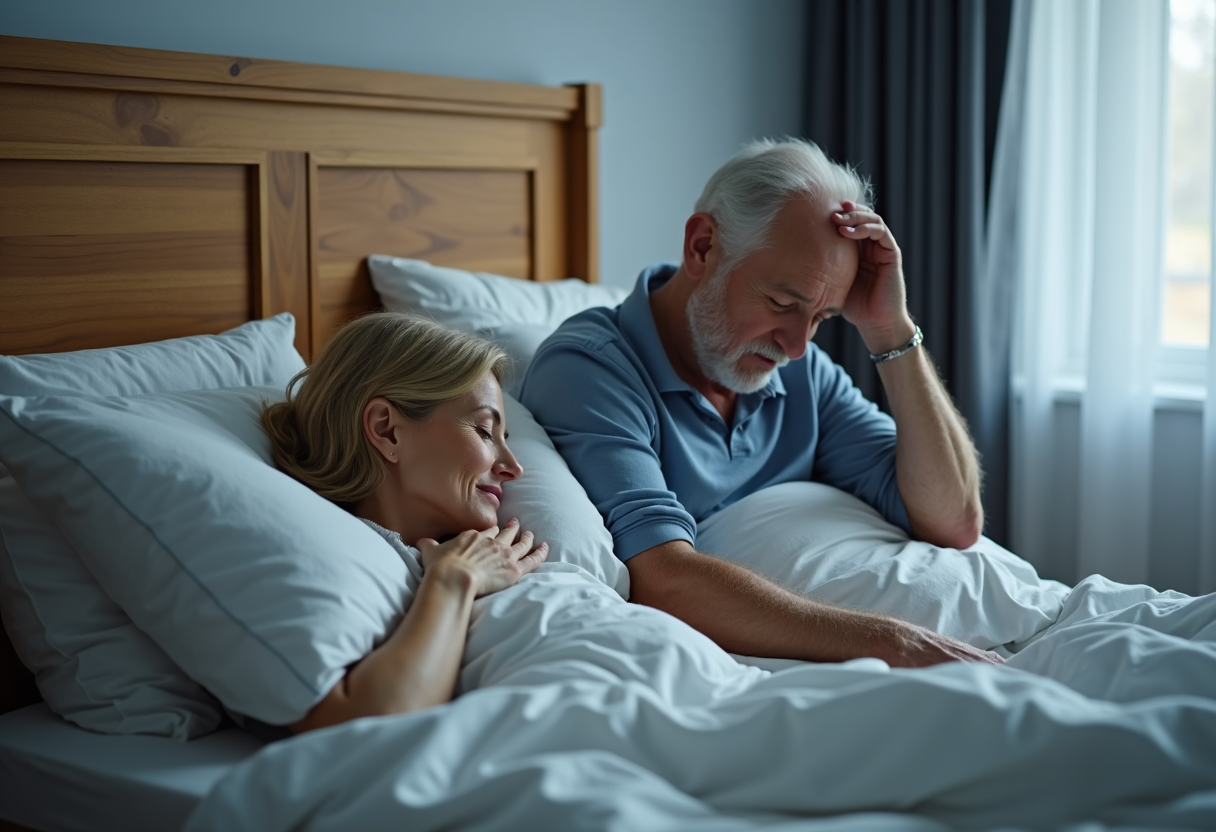
You used to fall asleep without thinking about it. Your head hit the pillow and that was more or less the end of the story until morning. Now you lie there waiting. Or you fall asleep fine but wake up at three in the morning with your brain already running through a list of things that cannot possibly need attention at three in the morning. Or you sleep a full night and still feel tired by early afternoon. If any of that sounds familiar, you are not imagining it and there is nothing wrong with you. Sleep genuinely changes as we get older, and understanding why makes it a lot easier to stop fighting it and start working with it instead.
The biology is straightforward even if the experience is annoying.
As we age, the body produces less melatonin, the hormone that signals to your brain that it is time to wind down. The internal clock also shifts, which is why so many people over sixty find themselves getting sleepy earlier in the evening and waking earlier in the morning than they did at forty. Deep sleep, the most restorative stage, becomes shorter and easier to interrupt. Minor things that never used to wake you, a car outside, a partner turning over, a slightly full bladder, suddenly do. None of this is a disorder. It is a normal biological shift that happens to almost everyone and gets almost no attention compared to the sleep advice aimed at younger people.
The problem is that the world is still set up for people who sleep from eleven to seven.
Evening social events, late news, family dinners that stretch past nine, television that gets interesting right around the time your body is ready to call it a night. Fighting your own biology to stay socially engaged is exhausting in a way that is hard to explain to someone who is not experiencing it. The simplest reframe is this: your sleep schedule is not a character flaw. If you are genuinely ready for bed at nine, going to bed at nine is not embarrassing. It is just listening to your body, which is generally a good idea at any age.
Napping deserves a more nuanced conversation than it usually gets.
The standard advice is to avoid napping because it interferes with nighttime sleep. That is true for some people and completely untrue for others. A short nap of twenty to thirty minutes in the early afternoon can restore energy and improve mood without touching nighttime sleep quality at all. The key word is short. Longer naps, especially late in the afternoon, are more likely to leave you groggy and make falling asleep at night harder. If you are a natural napper, a brief early one is probably fine. If you find yourself waking from naps feeling worse than before, your body may be telling you to skip it.
There are a few things that genuinely make a difference for most people.
Keeping a consistent wake time, even on weekends, is probably the single most effective habit for stabilizing sleep. Your body loves routine more than almost anything else, and a consistent anchor point in the morning helps regulate everything that comes before it. Limiting alcohol in the evening matters more than most people realize. Alcohol helps some people fall asleep but it disrupts the second half of the night significantly, which is why a glass of wine with dinner can leave you wide awake at two in the morning feeling oddly alert. Cooler bedroom temperatures, somewhere around eighteen degrees Celsius, support the drop in core body temperature that the body needs to stay asleep.
Light is a bigger factor than most people give it credit for.
Bright light in the morning, even just sitting near a window for twenty minutes after waking, helps reinforce your internal clock and can gradually shift your sleep patterns in a more useful direction. Screens in the evening are the opposite problem. The blue light from phones and tablets suppresses melatonin and keeps the brain in a more alert state than you want at ten at night. This is not news to most people, but knowing it and actually putting the phone down an hour before bed are two different things.
When to talk to a doctor is worth mentioning.
Snoring that is loud and irregular, gasping during sleep, or waking up repeatedly feeling like you have not slept at all can be signs of sleep apnea, which is both common and very treatable. Restless legs, chronic insomnia that lasts more than a few weeks, or sleep problems that are affecting your daily functioning are all worth bringing up with your doctor rather than just pushing through. Tired is not a permanent condition you have to accept.
Most sleep changes after sixty are normal, manageable, and not nearly as alarming as they feel at three in the morning when your brain has decided it is time to review every decision you made in 2007. A few small adjustments, a little less fighting your own body, and a bit of patience with the process goes a long way.