
Photography as Memory-Keeping and Art
Hi there, and welcome back!
Yesterday we talked about writing your memoir. Today, let’s talk about the other way you’re already documenting your life—probably without even thinking about it.
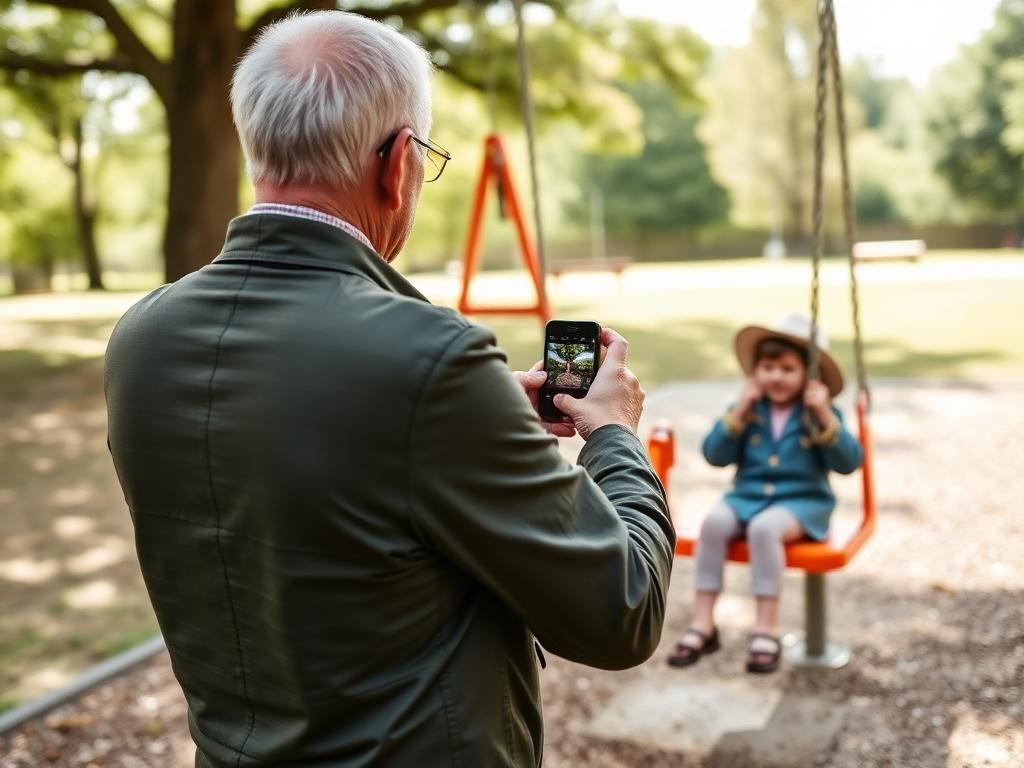
How many photos did you take this week? A dozen? Fifty? If you have a smartphone, the answer is probably “more than I realize.” We snap pictures of grandkids, sunsets, the garden, that weird thing the dog did, the recipe we want to remember. We’ve become accidental photographers, all of us.
But here’s what most people don’t realize: Photography isn’t just about capturing moments anymore. It’s about seeing the world differently. And when you start paying attention to what you’re photographing and why, something magical happens. You start noticing beauty in ordinary places. You start creating art without even trying.
Welcome to Part 2 of “The Creative Spirit,” where we’re exploring photography as both a practical tool for memory-keeping and a genuine creative outlet. No fancy camera required. No technical expertise needed. Just you, your phone (or camera), and a willingness to see your world with fresh eyes.
You Already Have the Best Camera
Let’s get this out of the way: You don’t need expensive equipment.
WOW: The camera in most smartphones today is more powerful than the professional cameras used by National Geographic photographers 20 years ago. You’re literally walking around with a photo studio in your pocket.
If you have a smartphone, you have everything you need. If you prefer a dedicated camera—great! Use what feels comfortable. The best camera is the one you’ll actually use, not the fanciest one gathering dust in a closet.
Memory-Keeping: The Practical Side
Before we get to the artistic stuff, let’s talk about why photography matters for everyday life.
Photos are how we remember. Not just the big moments—weddings, graduations, birthdays—but the small ones that make up a life. The way your kitchen looks on a Tuesday morning. Your grandchild’s gap-toothed smile at age six. The garden you worked so hard on this summer.
Here’s the thing about memory: It’s unreliable. We think we’ll remember everything, but we don’t. Photos anchor us to specific moments and help us say, “Yes, that really happened. That’s what it looked like. That’s who I was.”
Simple Photo Projects for Memory-Keeping:
- The Weekly Portrait: Take one photo of yourself every Sunday. Same spot, same time. At the end of the year, you’ll have 52 photos showing how you’ve changed (or stayed wonderfully the same).
- Grandkid Growth Chart: Every visit, take a photo of your grandchild in the same spot. Years from now, you can watch them grow in fast-forward.
- The “Before I Forget” Project: Photograph things you want to remember. Your mother’s handwriting. The view from your favourite chair. The way light comes through the kitchen window at 3 PM.
- Recipe Documentation: Before you make Grandma’s famous butter tarts, photograph the recipe card (including the stains and notes). Photograph the process. Photograph the finished product. One day, someone will treasure having these.
- Everyday Moments: The mundane stuff is what people forget first. Your husband reading the paper. The dog sleeping in his favourite spot. Tuesday night dinner. These become precious later.
LOL: Marilyn’s mother spent years taking photos of “special occasions”—and now we have 400 pictures of people standing stiffly in front of cakes, and almost none of her just living her life. Photograph the ordinary! Future you will thank present you.
Now for the Fun Part: Photography as Art
Here’s where it gets interesting. Once you start paying attention to what you’re photographing, you start seeing possibilities everywhere.
That sunrise isn’t just pretty—it’s a study in colour and light. The frost on the window isn’t just cold—it’s an abstract pattern. Your cat napping in a patch of sunlight isn’t just cute—it’s a composition of shapes and shadows.
You don’t have to call yourself a photographer. You don’t have to show anyone. But allowing yourself to see the world as something beautiful worth capturing? That changes how you experience every single day.
Simple Ways to Improve Your Photos (Without Getting Technical):
1. Get Closer Most people photograph from too far away. Step closer. Fill the frame with your subject. You’ll be amazed at how much more interesting your photos become.
2. Look for Light Good light makes ordinary things extraordinary. Early morning and late afternoon have the best natural light (photographers call these the “golden hours”). But even indoors, notice where the light is coming from and how it falls on your subject.
3. Change Your Angle Stop taking every photo from eye level. Get low. Shoot from above. Move to the side. A different perspective can turn a boring photo into something special.
4. Keep It Simple One clear subject is better than a cluttered frame. Before you take the photo, ask: “What am I actually trying to show here?” Then remove (or avoid) everything else.
5. Rule of Thirds Imagine your photo divided into a tic-tac-toe grid (most phone cameras can show you this). Place your subject along one of those lines or at an intersection point instead of dead centre. It creates more visual interest.
YAY: The best part? Digital photos are free. Take ten versions of the same shot from different angles. Delete the bad ones. Keep the good ones. No wasted film, no extra cost. Just experimentation and learning.
“But I’m Not Artistic”
We hear this constantly, and it’s not true.
If you’ve ever arranged flowers in a vase, you have an eye for composition. If you’ve ever picked out clothes that go together, you understand colour. If you’ve ever decorated a room, you know about balance and focal points.
WTF: Somewhere along the way, we decided that “art” was something only special people could do. That’s garbage. Art is just paying attention and sharing what you see. You already do this—you’re just not calling it art.
Photography gives you permission to notice beauty. To stop and really look at something. To say, “This matters to me enough to capture it.” That’s art. You don’t need anyone’s approval or a gallery show to make it valid.
Photo Projects That Spark Creativity:
- 52 Weeks of [Something]: Pick a theme and photograph it every week for a year. Flowers. Doors. Textures. Morning light. Your coffee cup. Watching yourself notice the same thing in different ways is fascinating.
- Alphabet Hunt: Photograph objects that look like letters of the alphabet found naturally in your environment. Tree branches that form a Y. A crack in pavement that looks like a T. It trains you to see shapes everywhere.
- Colour Days: Spend a day photographing only red things. Then blue. Then yellow. You’ll start seeing colour differently.
- The View from Here: Every place you go—the grocery store, the park, your doctor’s office—take one photo that captures something about that place. Build a visual diary of where your life takes you.
- Grateful Moments: Photograph one thing each day that made you grateful. At the end of a hard week, scroll through and remember the good stuff.
What to Do With All These Photos
Taking photos is fun. Having 10,000 unsorted photos on your phone is overwhelming. Here are simple ways to make your photos useful:
- Create Photo Books: Services like Shutterfly, Costco Photo Centre, or even Walmart let you turn your photos into printed books. One book per year, or one per grandchild, or one per vacation. Future generations will treasure these.
- Share Digitally: Create shared albums on your phone (iPhone: Shared Albums; Android: Google Photos shared library). Grandkids get new photos automatically, and you don’t have to text them one by one.
- Print Your Favourites: Seriously. Print them. Frame them. Put them on your fridge. Digital photos hidden in a phone don’t bring the same joy as seeing them every day.
- Delete Ruthlessly: You don’t need twelve versions of the same shot. Pick the best one, delete the rest. Your future self will thank you.
WOW: Studies show that looking at photos of happy memories triggers the same positive brain response as experiencing the moment itself. Your photo collection isn’t just documentation—it’s a mood-boosting tool.
The Unexpected Gift
Here’s what people tell us after they start taking photography seriously (even just phone photography):
“I notice things I used to walk right past.”
“I look forward to my morning walk now because I’m always seeing something new to photograph.”
“I feel more creative than I have in years.”
“My grandkids ask to see my photos now. We have real conversations about what I’m seeing and why I took the picture.”
Photography doesn’t just document your life—it makes you more present in it. It gives you a reason to slow down, look closely, and appreciate what’s right in front of you.
And honestly? At our age, that might be the most valuable thing of all.
Our Shared Wisdom
Do you enjoy taking photos? What do you like to photograph most? Have you discovered anything beautiful or interesting through your camera lens that you might have missed otherwise?
Tomorrow’s Finale
In Part 3, we’ll wrap up “The Creative Spirit” series by talking about late-blooming artists—people who discovered creative passions in their 60s, 70s, and beyond. Spoiler: It’s never too late to start something new, and you don’t need permission from anyone to call yourself creative.
Until then, grab your phone and take a photo of something that makes you smile. Just one. See what you notice.
Warmly,
Bill and Marilyn
Founders of Canadian Senior Moment
**Explore More:**
– Browse our archive of 200+ articles at CanadianSeniorMoment.ca
– Check out our bookshop for helpful Canadian senior resources
– Join our Facebook community for daily discussions
*Not a member yet? Forward this to a friend who’d benefit!*